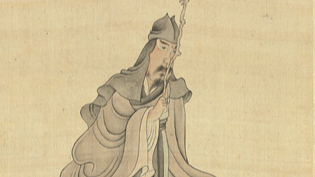
Tao Yuanming
Introduction
Tao Yuanming, also known as Tao Qian, was a prominent Chinese poet of the Eastern Jin Dynasty (317-420). Born in the year 365, Tao is celebrated for his pastoral poetry and his profound influence on Chinese literature. He is often regarded as a symbol of the literati's ideal of reclusion and the pursuit of a simple, harmonious life in nature. Tao Yuanming's legacy has endured for centuries, inspiring countless poets, writers, and artists. His most famous work, The Peach Blossom Spring, remains a quintessential expression of the idyllic lifestyle that captivated the Chinese imagination.
Life and Career
Tao Yuanming was born into a scholarly family in present-day Jiujiang, Jiangxi province. Despite his noble lineage, Tao faced financial hardships throughout his life. He initially pursued a career in government service but found the bureaucratic environment to be stifling and corrupt. Disillusioned with politics, Tao resigned from his post at the age of 29, famously declaring, "I won't bow like a servant in return for five bushels of rice." This act of defiance marked the beginning of his life as a recluse, dedicated to poetry, farming, and self-cultivation.
Tao's decision to live in seclusion was not uncommon among scholars of his time, who often sought refuge from the chaos of political life in the tranquility of nature. His poetry reflects his longing for a simpler existence, free from the constraints of society. Tao's works are characterized by their clarity, sincerity, and connection to the natural world. His poetry often celebrates the beauty of rural life, the changing seasons, and the joy of solitude.
Literary Contributions
Tao Yuanming's literary output includes over 120 poems, essays, and prose works. His poetry is notable for its simplicity and directness, eschewing the ornate language and complex allusions favored by his contemporaries. Tao's verse is imbued with a sense of contentment and acceptance, as he embraces the natural cycles of life and death. His poems frequently feature themes of agrarian life, friendship, and the harmony between humanity and nature.
The Peach Blossom Spring, Tao's most famous work, is a prose narrative that has become a cultural touchstone in Chinese literature. The story describes a fisherman who discovers a hidden utopia where people live in harmony with nature, unaware of the outside world. This tale of an idyllic realm untouched by the strife of contemporary society captured the imagination of generations and became a symbol of the yearning for an ideal world. The concept of Peach Blossom Spring has since permeated Chinese culture, representing the dream of a perfect, harmonious existence.
Influence and Legacy
Tao Yuanming's influence extends far beyond his own era. His works inspired countless poets and scholars throughout Chinese history, including renowned figures such as Li Bai and Su Shi. His poetry and ideals also resonated with later generations, shaping the development of Chinese literature and philosophy.
Tao's emphasis on simplicity and natural beauty contributed to the aesthetic principles of Chinese landscape painting and garden design. His vision of a harmonious, pastoral life influenced the creation of idyllic retreats in both art and architecture. The enduring appeal of Tao's work lies in its timeless exploration of the human relationship with nature and the pursuit of inner peace.
Tao Yuanming's legacy continues to inspire contemporary artists, writers, and thinkers. His works have been translated into numerous languages, allowing his poetic vision to reach a global audience. Tao's life and writings remain a testament to the enduring power of simplicity, authenticity, and the natural world in human creativity and expression. Photo Gallery(3 pictures)CategoriesLiteratureTagLiterary MastersPoetryRelatedThe Peach Blossom SpringSecret Love In Peach Blossom LandQiu YingCatalogue1. Introduction2. Life and Career3. Literary Contributions4. Influence and Legacy- - - []








